One of the things that becomes clear very quickly in Shnat Sherut 50 Plus is that a service year is not only about what volunteers do but about what kind of life it creates. Sometimes, that life echoes in unexpected ways.
This year, that echo runs through one family.
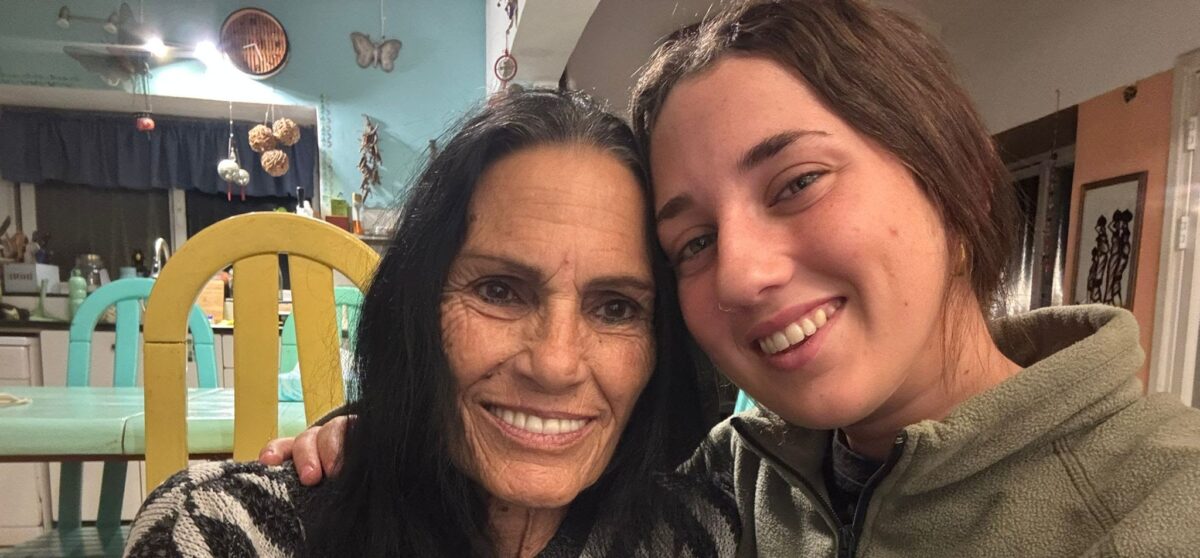
Smadar Carmon and her granddaughter Romi Ouster are both in a service year, Smadar in Shnat Sherut 50 Plus, Romi in a service year for young adults. Two generations, two frameworks, two very different daily realities and a shared language of commitment, presence, and giving.
Smadar is part of the Mateh Asher group and lives in Rosh HaNikra. Romi is volunteering with Ayalim Association and lives in Eilat. Both were born and raised in Moshav Nordiya. Both bring energy, drive, and a deep sense of purpose. Big words like mission and values sound simple and completely believable when they come from them.
Smadar is a grandmother of twelve grandchildren; Romi is her second granddaughter.
Smadar: a year of presence and of asking new questions
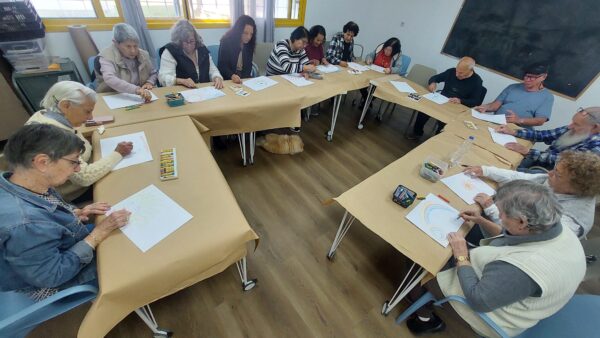
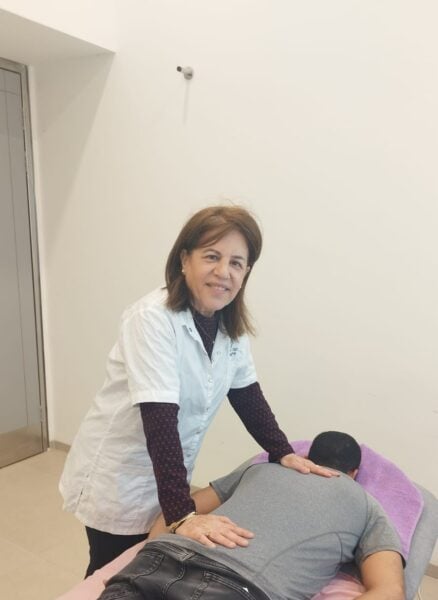
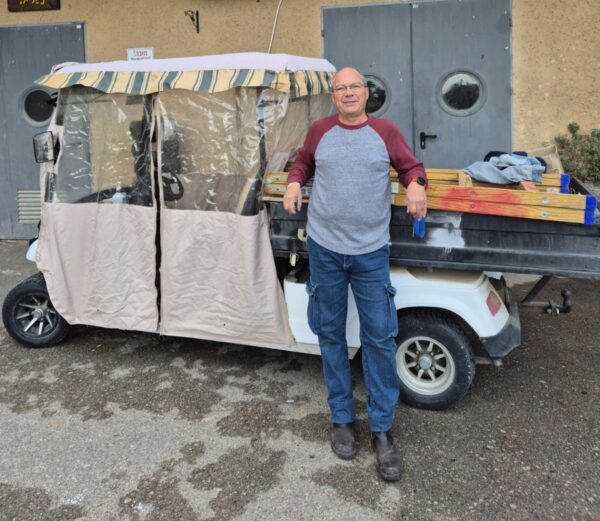
Smadar began her service year in September. She works in multiple settings in Rosh HaNikra and across the Mateh Asher Regional Council: in the agricultural farm, in an anthroposophical school, in movement classes for different age groups, and more.
Alongside all this, she continues to dance – something that has accompanied her throughout her life.
For Smadar, the service year is also a deeply personal process. She describes a path that moved quickly from one framework to another: after high school she studied at Wingate, served three months in the army, married, and built her life within very clear structures. The service year, she says, is the first time she has truly stepped out of those frameworks, creating content inside a structure rather than stepping into one that already exists.
It also means living away from home – from children, grandchildren, and the familiar rhythms of daily life. “It’s a personal check,” she says. “Where am I? Who am I? Where else can I go? What else can I do?” Even living long-term with a roommate is new territory for her.
Moments that stay
When asked about moments that “did them good,” Smadar doesn’t hesitate. She speaks about the autistic children she meets each week at the agricultural farm, how she waits for them, how one week she was absent because she was dancing, and the teacher sent her a message: “Smadar, the children waited for you.” The message stayed with her.
She also describes a large community project in Rosh HaNikra called “Bishvil HaKadur”. Along a walking path, stations were created: sowing wildflowers as a symbol of hope for renewal, creating mandalas from nature, identifying animal tracks, and more. The moment of success came when residents, children, teenagers, families, older adults, arrived. After two years of disconnection, it felt like helping a community come back together.
Romi: building futures, literally and figuratively
Romi began her service year in August. Her entire group spent two and a half months building a new student village in Arad, and in parallel renovated ten caravans that were later transferred to Gevar’am in the Gaza Envelope. Only a month and a half ago, the group was divided into communes, and Romi was, to her delight, placed in Eilat.
Her work is mainly in education. In the mornings, she assists and serves as an adult, supportive presence in an elementary school that integrates children at risk. In the afternoons, she works in an after-school club for children of asylum seekers. Once a month, her group carries out a building day with Ayalim’s students, building and renovating in the student village and across the city.
What stands out in the way Romi describes her work is not only what she does, but how she sees the young people she works with. She speaks about learning their daily realities and trying, in the ways she knows, to connect them to a different future conveying one clear message: they do not have to stay where they are. They can choose where they want to be.
Romi speaks about the long weeks of building. She didn’t know what she was walking into, but found herself deeply connected to the work. Seeing tangible progress, a village completed after hard physical effort, caravans renovated and moved to Gevar’am, made the experience feel full and meaningful. “You see it with your own eyes,” she says. “It’s new, and it’s good.”
What is given up and what is protected
Both speak openly about the cost.
For Smadar, it is the distance from close daily contact with her children, grandchildren, and friends. What she did not give up was dance.
For Romi, it is less privacy and less time alone, and training less than she would like. What she did not give up was the sea.
This year, both have the sea – Smadar in Rosh HaNikra, Romi in Eilat. A small geographic detail that somehow says a lot.
For those of us who work with Shnat Sherut 50 Plus, this conversation captures something essential: how a service year becomes not only an act of contribution, but a shared language across places, across generations, and sometimes, across the Shabbat table.