When Plans Change Overnight
The war caught us at home in central Israel during what was meant to be a short Purim break. The plan had been simple: return north after the holiday for a weekend that included a dance performance at Kibbutz Ga’aton.
But like so many plans in recent times, this one dissolved quickly. In its place came a far more complex question: how to continue volunteering in the north while physically remaining in the centre, in a protected home.
Between Commitment and Caution
The tension was immediate and deeply felt. On the one hand, this is a year of service—a commitment not taken lightly. On the other, the reality of travelling north and staying in an apartment without adequate protection did not feel like a responsible choice.
The internal conflict was accompanied by something more personal. The places flashing across the television during siren alerts were no longer abstract. They had become layered with memory and familiarity – faces, homes, a local restaurant, even a hairdresser in a community that had become known and meaningful.
Finding a Way to Continue
It became clear that, for now, the way to contribute would have to be from a distance.
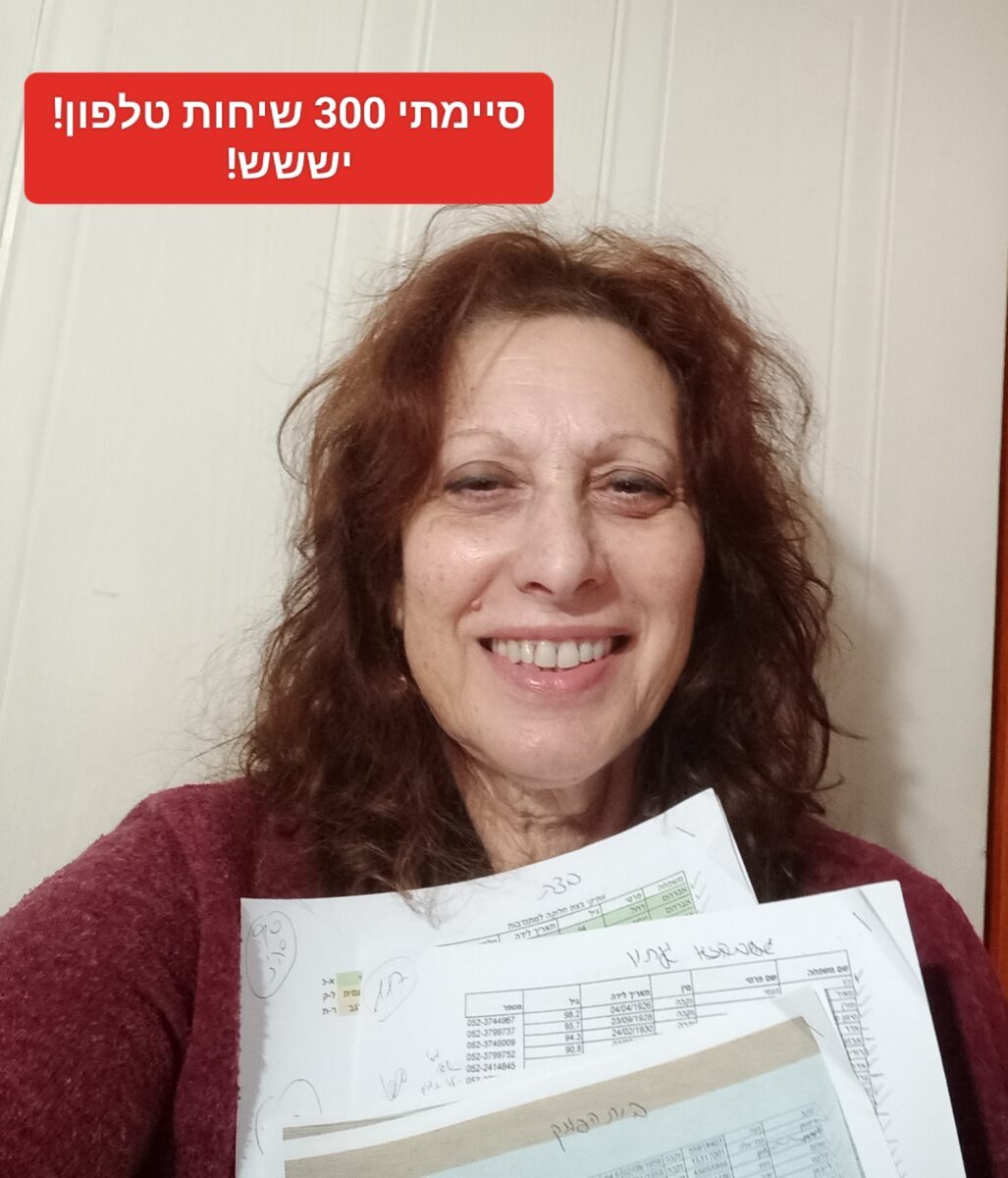
The opportunity came through the council’s telephone support centre, run via the Ashreinu Centre where I usually volunteer. I was given a list of 300 elderly residents across three communities, with the task of conducting an initial mapping of needs.
Each phone call became a bridge back to the north.
Conversations That Go Beyond Check-Ins
What began as structured outreach quickly evolved. The conversations deepened, becoming more personal, more human. Some calls were with people already known to me, creating moments where different parts of my experience quietly converged.
Calling from my home in Rishon LeZion, I found myself unexpectedly, and completely, connected to the communities I could not physically reach.
There were moments of genuine warmth, even a kind of quiet magic, that stood in contrast to the surrounding uncertainty.
From Support to Relationship
As the work progressed, the focus shifted. The next stage involved reaching individuals identified as experiencing loneliness. These conversations were longer, more open-ended, shaped by the needs of each person.
In these exchanges, a different role began to emerge, not just a volunteer making calls, but something closer to “a friend from afar.”
There was even talk of meeting in person when circumstances allow, a small but meaningful thread of continuity into the future.
Continuing Educational Connections
Alongside the phone-based support, another connection to the north remained intact. I shared early childhood educational activities related to spring and the Passover holiday with a kibbutz where I had previously worked in person.
It was not the same as being there, but it was still a form of presence, one that carried intention and care.
Rethinking What Connection Means
There is no doubt that face-to-face interaction is irreplaceable. That remains the ideal.
And yet, this period has revealed something important: connection does not disappear with distance. It changes form. It asks for adaptation. And, at times, it becomes just as meaningful in unexpected ways.
Looking Ahead
For now, this is what volunteering looks like – flexible, responsive, and shaped by reality.
The hope remains simple and shared: a return to a time when presence is easier, when travel is possible, and when connection can once again be lived in the same physical space.
Until then, even from afar, the work continues.