Living Between Two Realities
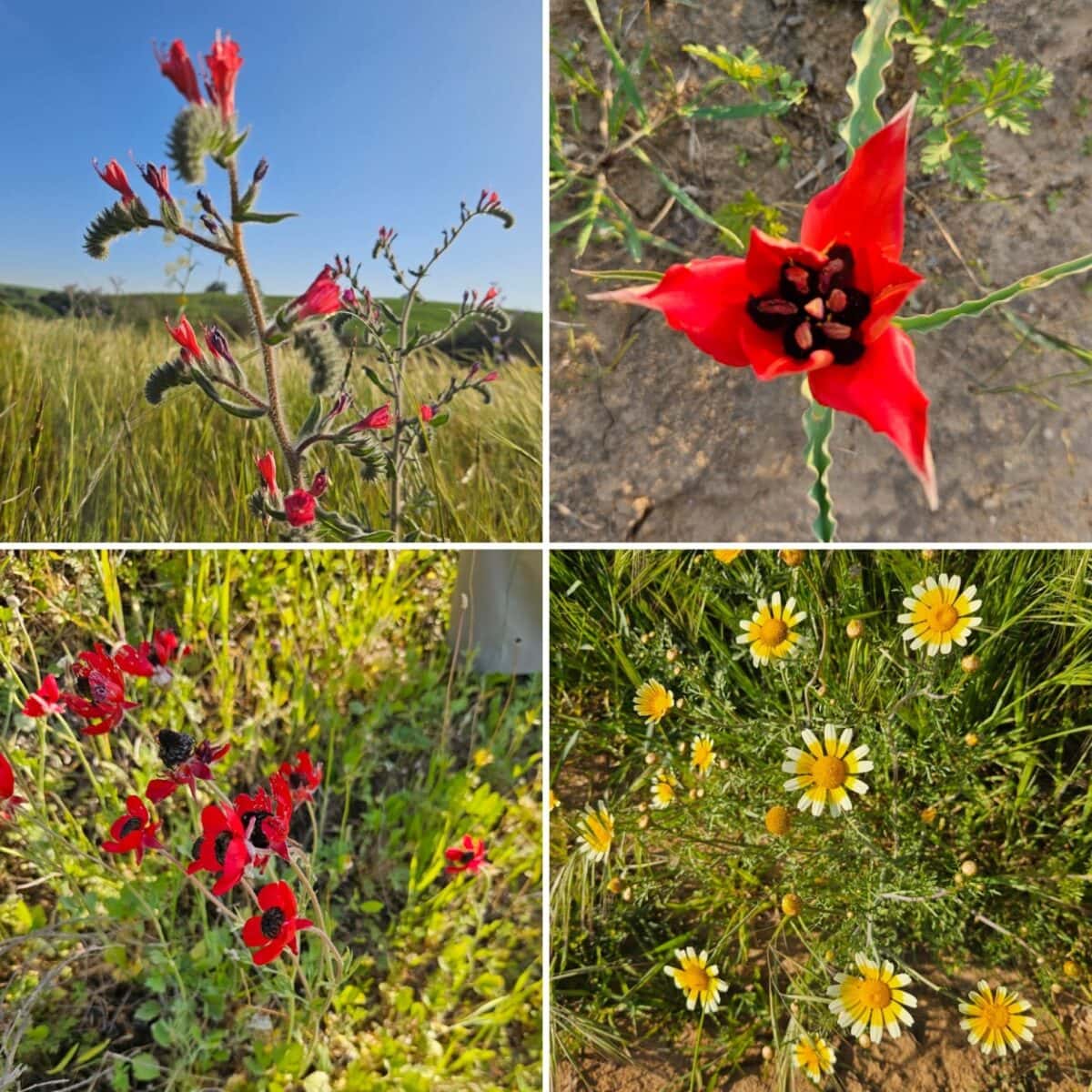
There are moments in Kfar Aza that feel almost untouched by war. Early mornings carry the sound of birds, spring blooms stretch across the landscape, and the fields return to green.
And yet, at the very same time, elsewhere in the country, life is punctuated by sirens, alerts, and the constant movement toward shelters.
This contrast, between calm and disruption, sits quietly beneath everything. It shapes each day, even when it is not spoken about directly.
A House That Fills, Then Adapts
The week moved from emptiness to fullness.
It began with a quiet house, then gradually filled as young professionals arrived from Tel Aviv, seeking refuge from the sirens. They brought laptops, conversations, and a different kind of energy.
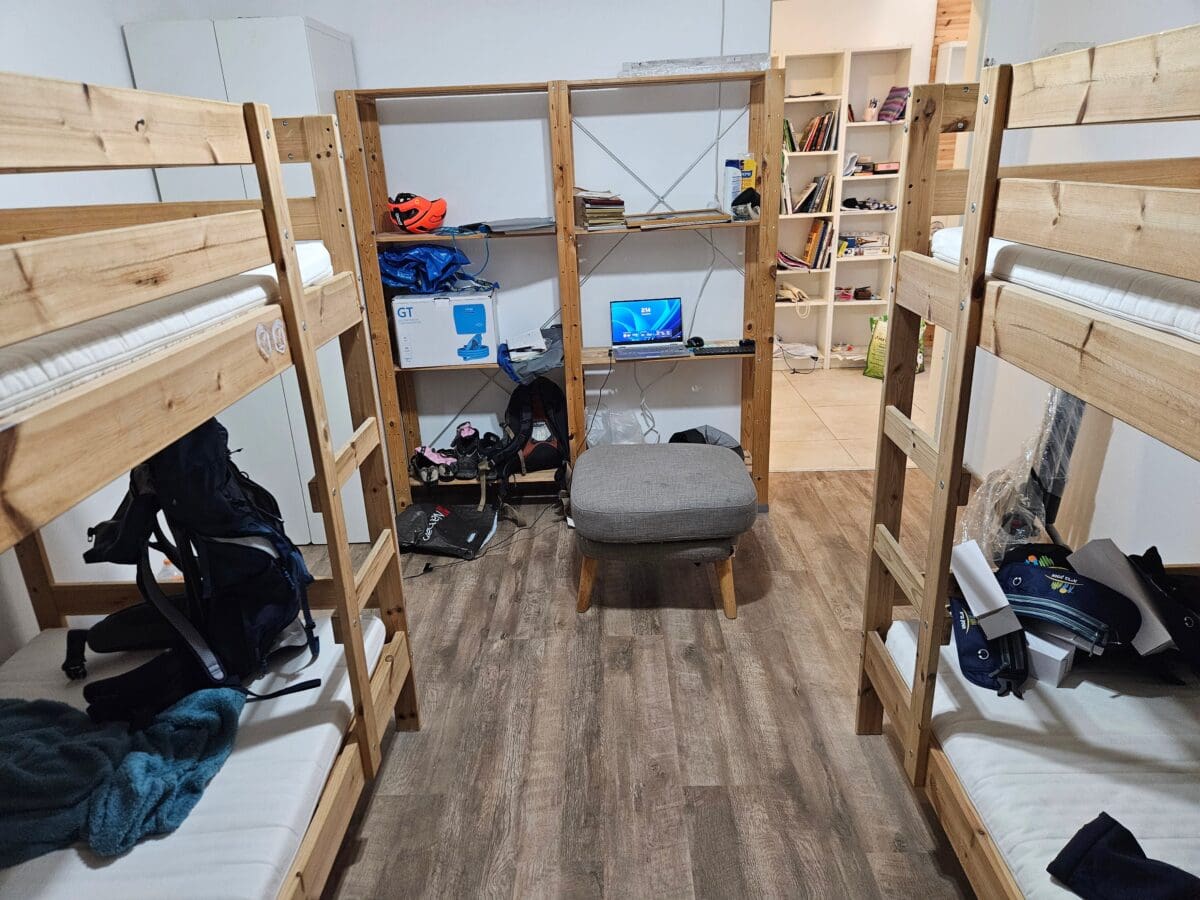
Almost overnight, every surface became a workspace, tables, patios, corners repurposed for living and working at once. When a donated bed arrived, the entire house shifted again. A desk moved into the safe room, an office became a bedroom.
What might seem like a small logistical adjustment became something more: a way of making life possible within the conditions at hand.
Moments of Connection
Amidst all of this, there were moments that felt both ordinary and quietly significant.
One evening, a local couple hosted a whiskey tasting on their deck. The setting was simple, but the words shared lingered. When the volunteers first arrived, there had been assumptions. perhaps they would need support, perhaps they would remain somewhat separate.
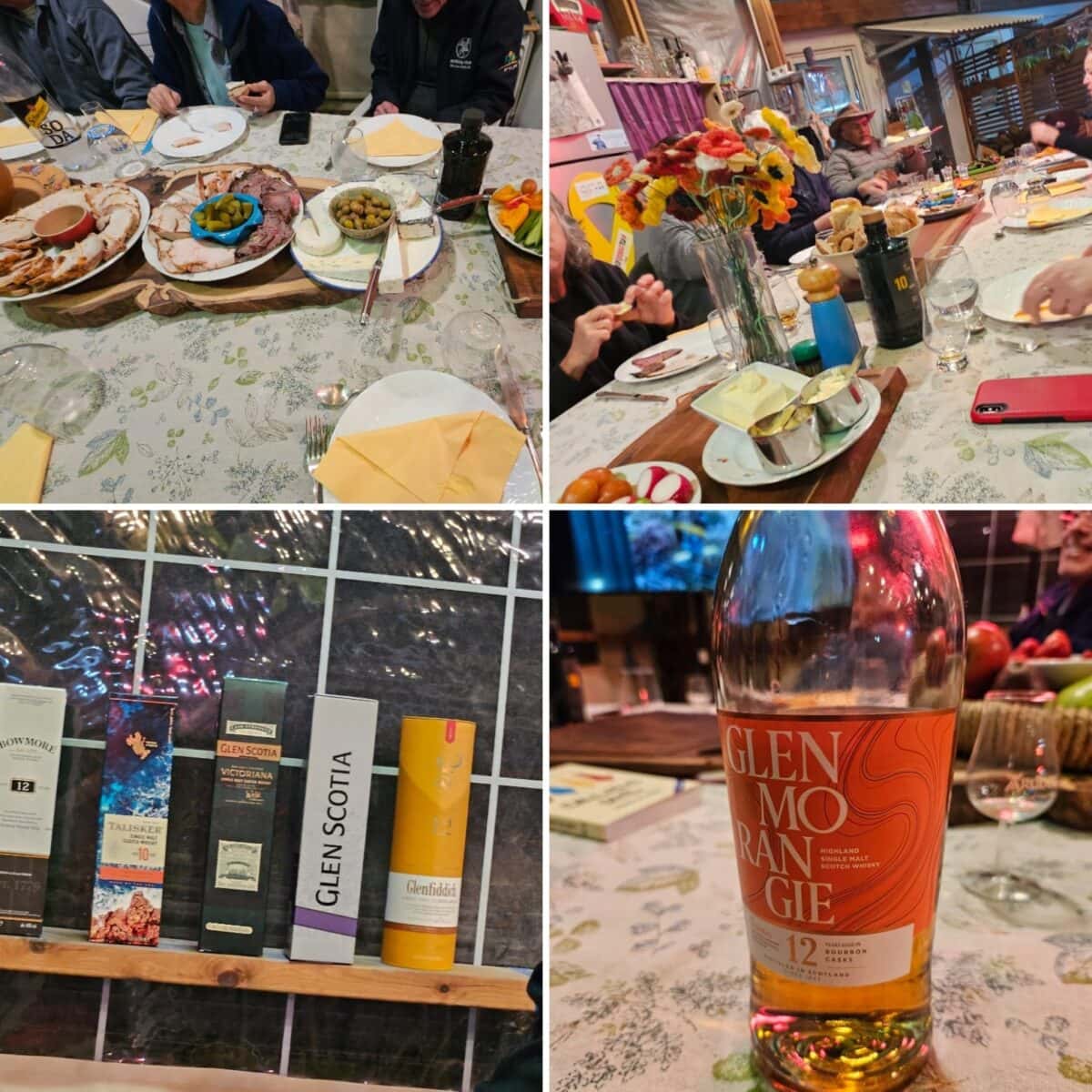
Instead, something else had emerged: genuine friendship. Mutual, unexpected, and deeply human.
Teaching at a Distance
Much of the work now takes place online. English lessons for 5th and 6th graders continue over Zoom – structured, engaged, and purposeful.
And yet, something is missing. The immediacy of a classroom, the small interactions, the unspoken exchanges, these are harder to recreate through a screen.
When opportunities arise to meet in person, a morning at the school, time at the educational farm, they carry a different weight. A reminder of what learning is meant to feel like.
Choosing Where to Be Needed
The reality of need brings difficult decisions.
When asked to support children’s houses on nearby kibbutzim, spaces held together by staff, soldiers, and volunteers, the need was clear. But so was the commitment already made to students through ongoing lessons.
In the end, the choice was to stay. To continue offering consistency where it had already been built.
In times like these, contribution is not about doing everything. It is about staying present where it matters most.
A Landscape That Continues
There are also moments that feel almost separate from everything else.
A walk through the Ruhama Badlands. Wildflowers, open space, a different rhythm. These moments do not erase the reality, they exist alongside it, creating a strange coexistence between calm and tension.
When the Quiet Breaks
Then, without warning, the balance shifts.
During a Wednesday evening dinner, in the middle of conversation, a siren sounded. No prior alert. No time to prepare. Just the instinct to move—to gather in a safe room and wait.
Only later came the understanding: rockets from Lebanon, reaching even here.
A reminder that the war is never far away.
Holding the Question
This dissonance returns again and again.
Here, there are stretches of calm. Elsewhere, family and friends run to shelters multiple times a day, waking at night to sirens, continuing life in between interruptions.
The contrast is difficult to reconcile. And yet, it is part of the same reality.
And so, the week ends as it began—with a question that lingers quietly beneath everything:
How long?