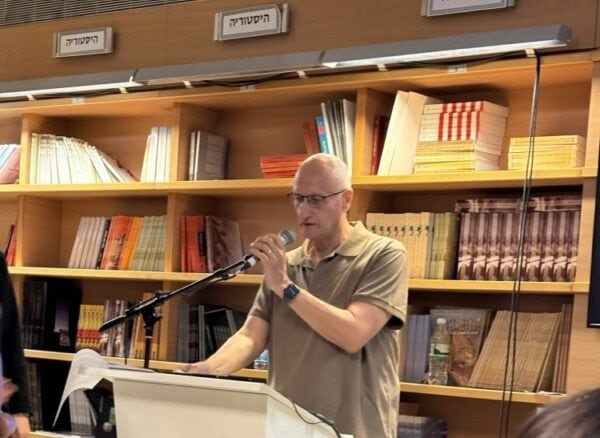

At the multi-generational Neve Eshkol Day Centre in the Eshkol Regional Council, accessibility has long been recognised as essential to community life. Over the years, the centre invested heavily in sound-accessibility solutions to enable older residents and people with hearing loss to participate in lectures, performances, and communal events.
Recently, however, a meaningful shift took place – one that began not with a budget line, but with the professional insight and quiet persistence of a Shnat Sherut 50 Plus volunteer.
Professional experience brought into the community
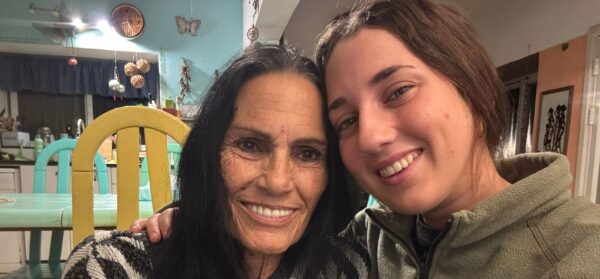
Smadar, a volunteer in the Shnat Sherut 50 Plus programme, has spent many years working closely with the deaf and hard-of-hearing community. Accessibility is not an abstract concept for her; it is a daily, lived reality and a field in which technology, dignity, and inclusion must evolve together.

When Smadar first raised the possibility of upgrading the existing sound-accessibility system at the Neve Eshkol Day Centre, the response was cautious. Just three years earlier, the centre had invested hundreds of thousands of shekels in an accessibility system through From the Heart (“מהלב”), a veteran company in the field. The management’s position was clear and understandable: such a significant investment needed to be fully utilised before considering any replacement.
Smadar respected that position but she did not let the conversation stop there.
A moment where insight met opportunity
During a joint meeting with the centre’s operations manager and director, the centre’s maintenance manager mentioned that the sound system in the main lecture hall was no longer functioning properly and required repair. He shared the repair quote and it was at this point that Smadar’s experience became decisive.
Drawing on her deep familiarity with newer accessibility technologies, Smadar explained that the cost of installing a modern, advanced system was almost identical to repairing the outdated one yet the benefits were far greater.
She outlined a system that removes many of the barriers users quietly struggle with:
- No need for dedicated accessibility headsets
- No limitation to a small group of users
- No visible distinction between “accessible” and “non-accessible” participants
Instead, participants connect via their own mobile phones, using Bluetooth or personal earphones, simply by downloading an app. The result is discreet, intuitive, and inclusive, allowing each person to engage comfortably, on their own terms.
Credibility built on real-world experience
When practical questions arose about reliability, user experience, and long-term service Smadar again drew on her past work. She recommended visiting a cultural venue in Be’er Sheva where the system is already in use, allowing the centre’s leadership to experience it directly rather than rely on descriptions.
In addition, she connected the director with the accessibility coordinator at the Motzkin Theatre, who could speak openly about both the system’s performance and the quality of the installation and ongoing support.
Importantly, this was not theoretical advice. The installation of this very system at the Motzkin Theatre two years earlier had taken place thanks to Smadar’s own advocacy and involvement giving her recommendations weight, credibility, and trust.
Change that begins with listening
No immediate decision was taken that day and that, too, is significant. What did change was the conversation itself.
For the first time, replacing the existing system is no longer dismissed outright. The discussion has shifted from “we’ve already invested” to “what truly serves our community today and tomorrow?”
This is the kind of impact Shnat Sherut 50 Plus volunteers bring to the field: not sweeping declarations, but professional insight, patience, and a commitment to dignity. Smadar did not arrive with authority, but with experience and by listening carefully to the concerns of the centre, she created space for real change.
If the new system is installed, it will not only upgrade technology. It will quietly expand participation, restore ease and confidence for users, and ensure that every voice in the room can truly be heard.