One of the things that becomes clear in Shnat Sherut 50 Plus is how often meaning appears in very small gestures. Not always in dramatic moments — but in repeated, simple acts that unfold over time.
For Nirit and Shlomo Zis, volunteers in the Merhavim group, that moment often begins with a hand touching soil.
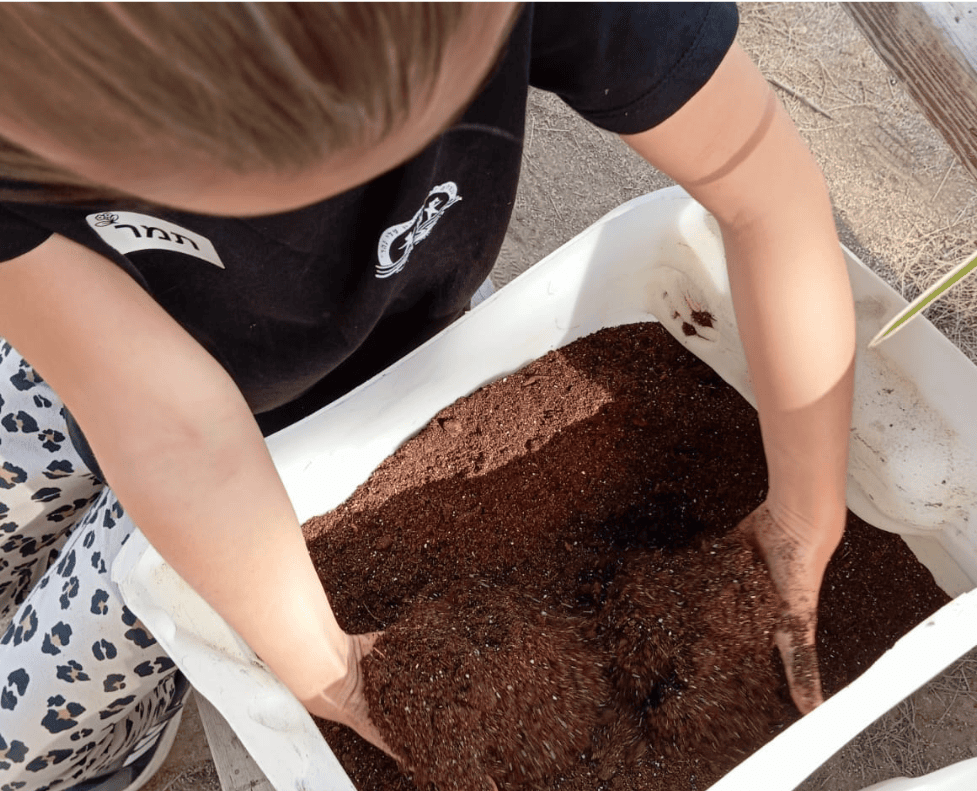
They write that no matter how many times they see it, they are surprised anew each time, a small child’s hand, or a hand of an older person, reaching into the earth. The wonder and joy that appear on the face come simply from discovering the feel of soil.
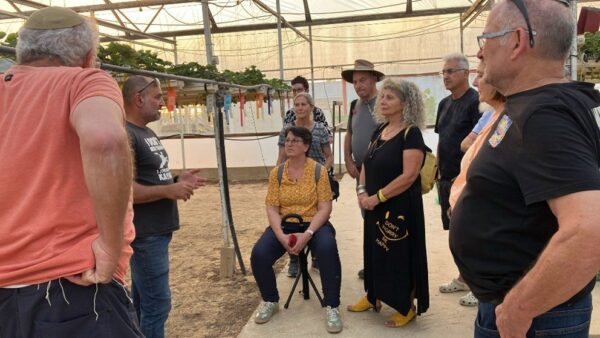
This year, Nirit and Shlomo chose to spend a Service Year for Adults in the south. As part of their volunteering, they run therapeutic gardening groups in schools and in a day center for senior citizens, and learn, again and again, what takes place in the shared space of a garden.

Children: from hesitation to trust
The process begins with preparing the planting medium: mixing potting soil, compost, and additional components such as perlite. Hands sink into the soil, play with it, feel it and do not hurry to pull away.
But the journey does not always begin easily. Sometimes there is hesitation, especially among children who are wary of dirt and dense textures. Often, after a brief pause and watching others, a child will try – at first only with fingertips. From there, the step into fuller engagement comes quickly. The pleasant texture creates calm, sparks excitement, and sometimes even brings deep concentration.
Older participants: memory, vitality, meaning
For the older participants, the touch of soil is much more than an activity. It reconnects them to memories of earlier life and offers a sense of vitality and meaning.
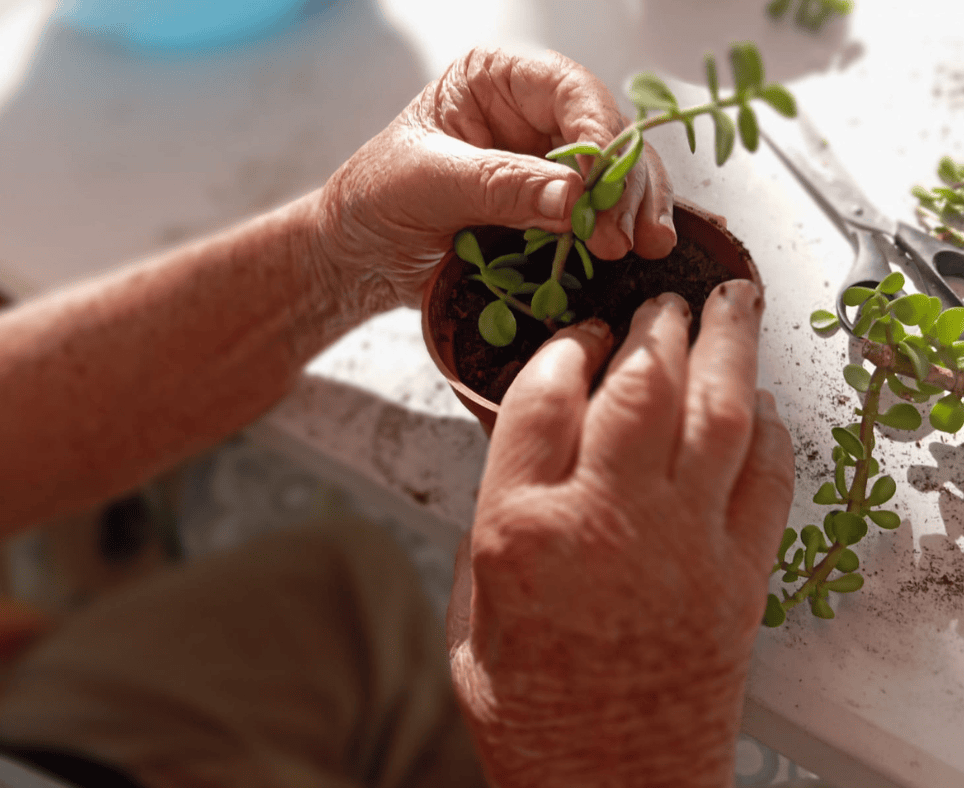
Their hands, hands that remember the work of the land, move gently and steadily, strengthening themselves through the act. The garden becomes a place where sustained effort is visible, where growth can be seen, and where patience bears fruit. This, in turn, strengthens a sense of hope and self-efficacy.
What the garden teaches
Over time, Nirit and Shlomo observe that the garden is not only a space for plants to grow, but for people, young and old, to slow down, to focus, and to feel capable.
In Shnat Sherut 50 Plus, volunteers live within the communities they serve, week after week, season after season. In the therapeutic gardens, this continuity allows trust to form – not through words, but through shared work and repeated presence.
As Nirit and Shlomo write, therapeutic gardening reminds us that healing is sometimes quite literally beneath our feet. Sometimes, all it takes is a palm dirtied with soil to find a moment of joy and calm.
With thanks to Nirit and Shlomo Zis, Merhavim group.