That moment took place during Merav Livni’s year of service with Shnat Sherut 50+, in one of the communities affected by October 7. It is a story about what can happen when experienced adults are given the opportunity not simply to volunteer, but to bring their skills, judgement and humanity into communities that need them.
A year of service she had never expected to undertake
Meirav had not imagined herself doing a year of service. She was younger than many participants and not yet retired. Two years earlier, she had undergone major back surgery and had spent much of the following year concentrating on her own recovery.
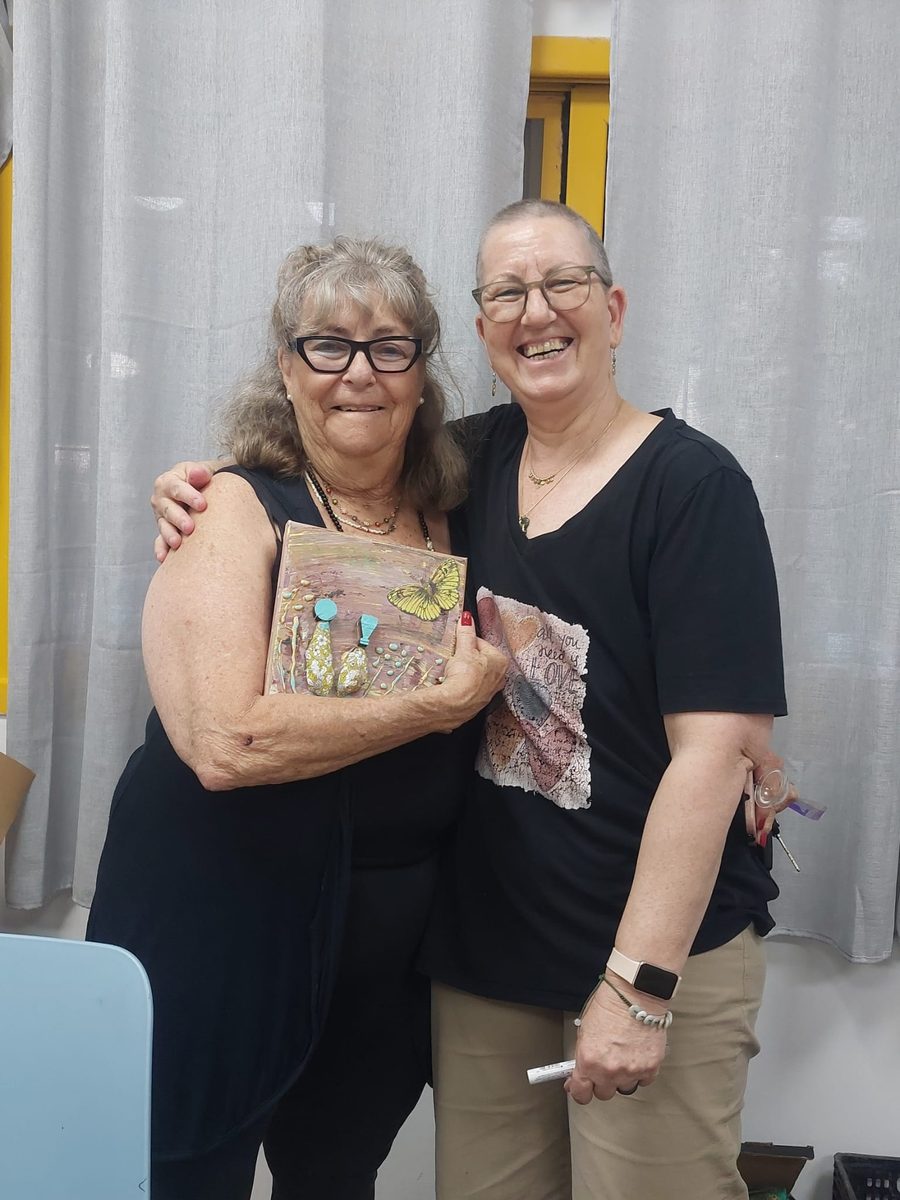
Shnat Sherut 50+ offered something different: an opportunity to turn outward again.
As Meirav put it, it was a chance “to do something for others and for myself as well.”
Her original assignment was decidedly practical. She was asked to support a small community centre with purchasing proposals, publicity and programme planning. But when she arrived, she discovered that the centre’s director was no longer there and that she did not even have access to its computers.
So she adapted.
She learned how the centre worked, sought procedural support remotely and gradually helped stabilise its operations and improve the support it provided to the wider community.
It is a small example of something fundamental to Shnat Sherut 50+: experienced adults bring more than an extra pair of hands. They bring the capacity to walk into an imperfect situation, work out what is needed and make things happen.
Creating a space built around strength
But Meirav also knew that her greatest strength lay in working directly with people.
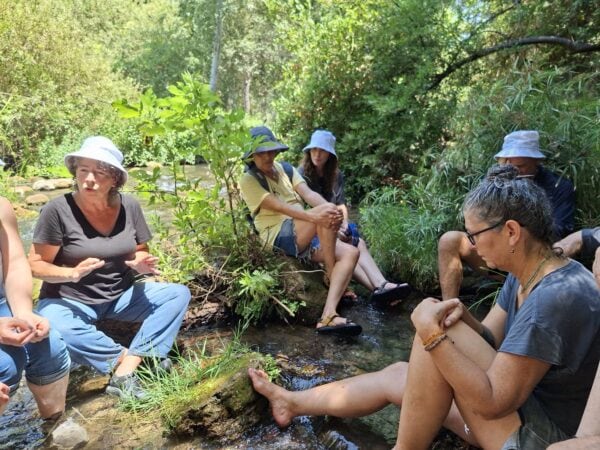
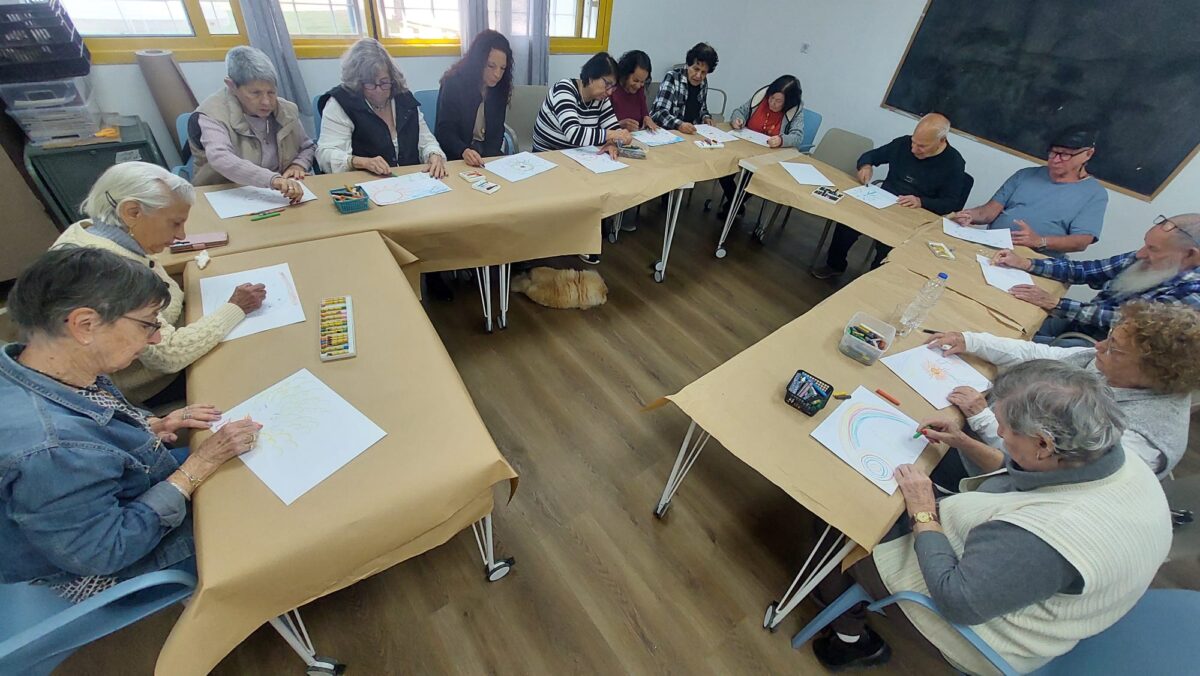
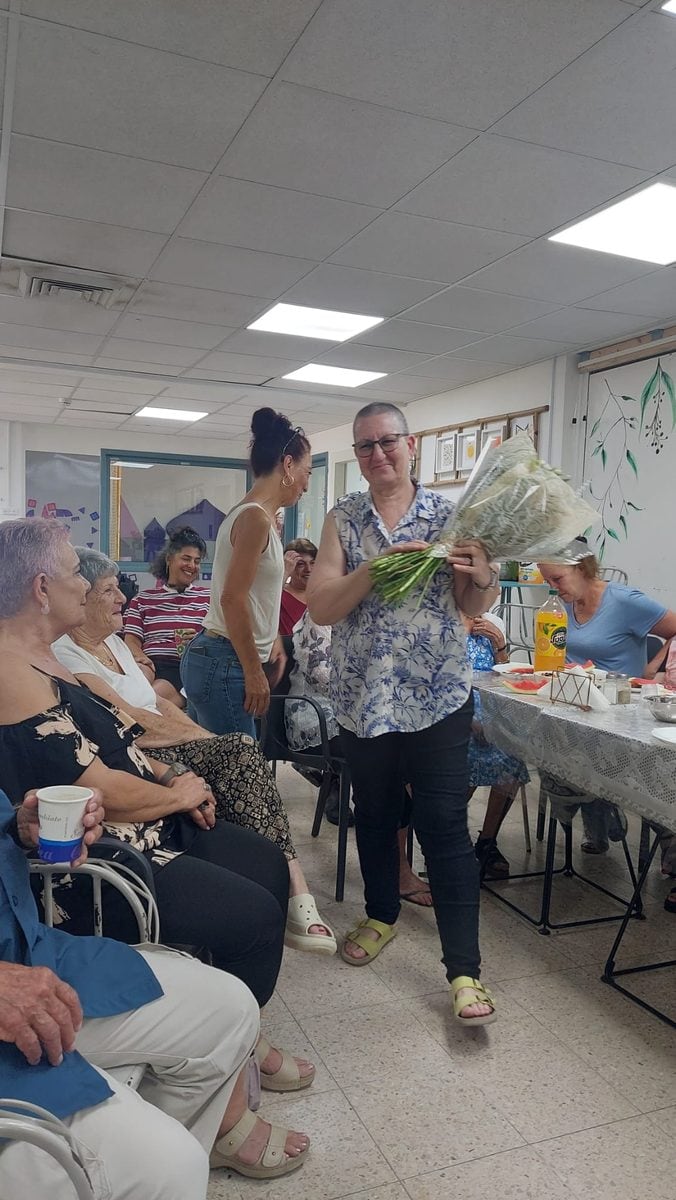
The community centre hosted a weekly group for older residents aged 70–85, and she began facilitating sessions with them. Rather than organising the group around trauma, she chose a theme she called “Resources and Inner Strengths.”
Together, participants explored important moments in their lives, remembered crises they had overcome and identified the “superpowers” they saw in one another. Sometimes they worked through art; sometimes they simply talked.
The approach mattered.
These were people living with the consequences of October 7. Yet the purpose of the group was not to define them through what had happened to them. It was to create a regular space in which they could reconnect with their own capacities, histories and relationships.
Then Meirav herself had to leave.
During the year, she was diagnosed with a cancerous tumour and underwent surgery. She was absent for around a month.
When she returned, the warmth of the group’s welcome made clear how significant the relationship had become. But returning also presented a difficult question. Meirav worried about having “disappeared” from the lives of people for whom feelings of abandonment after October 7 were already painfully real.
Rather than ignoring that rupture, she made it part of the work.
Finding meaning in what has been broken
For her first sessions back, Meirav introduced the group to Kintsugi, the Japanese tradition of repairing broken pottery while highlighting its fractures rather than hiding them.
The metaphor was powerful: the break cannot be undone. But neither does it have to be concealed.
The activity allowed participants to think about what remains after something has been broken — what they carry forward, what they remember and what they choose to emphasise. It opened a space for feelings that might otherwise have been difficult to articulate.
And within this group, another remarkable story was unfolding.
Fifteen minutes
One participant had experienced a stroke several years earlier that had significantly affected his speech. When he first joined the group, he sometimes relied on prepared sentences stored on his phone to explain his situation.
Because many of Meirav’s sessions used art and other forms of expression, he could participate without depending entirely on speech.
Gradually, something began to change.
He became more confident about trying to speak within the group.
Then, at the beginning of the summer, Meirav brought a collection of old black-and-white photographs to a session. She asked each participant to choose an image that reminded them of the long summer holidays of childhood.
For this man, a photograph unlocked a memory.
He began talking about attending summer camp in Morocco when he was ten years old, before his family came to Israel.
And he kept talking.
For fifteen uninterrupted minutes, he told the group stories and memories of that childhood summer, with an enthusiasm so vivid that everyone listening felt drawn into the scene with him.
The significance was not simply that he had spoken for fifteen minutes.
It was that over months of regular encounters, Meirav had created the conditions in which he felt able to try.
The power of showing up
Meirav’s story captures something at the heart of Shnat Sherut 50+.
It is not about arriving in a community with all the answers. It is about experienced adults being willing to show up, stay, listen, adapt and build relationships over time.
A volunteer can help stabilise a community centre and then sit around a table with older residents. She can bring professional skills, creativity and life experience but also consistency. And gradually, those repeated encounters can create trust, confidence and connection.
The program is built on a simple idea: Israel has an extraordinary resource in its older adults – people with decades of professional and life experience who still have an enormous amount to contribute.
In communities rebuilding after October 7, that resource matters.
Because recovery does not happen only through buildings, services and programmes. It also happens in ordinary rooms, through human relationships: a weekly meeting, an old photograph, a remembered childhood and fifteen minutes in which a man finds his voice again.