Over the past several years, thousands of Israeli soldiers have faced the long journey from injury toward recovery. Since October 7, 2023 and the war that followed, the need for rehabilitation has become an especially visible and painful part of Israeli life.
Behind the numbers are individual men and women rebuilding their lives after injury – managing pain, regaining strength and independence, and, for many, coping with experiences that have left emotional as well as physical scars.
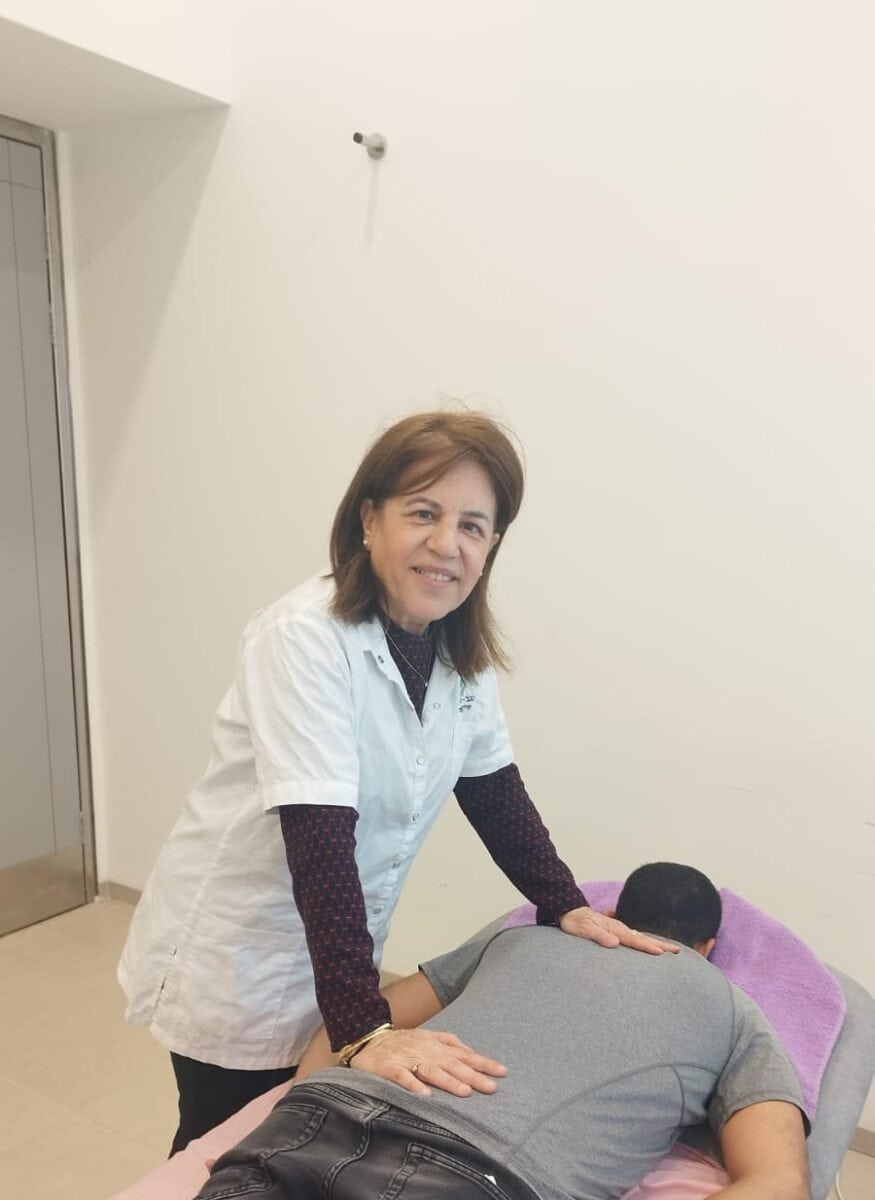
At Adi Negev, some of the wounded soldiers undergoing rehabilitation have found an additional source of support in regular Shiatsu treatments provided by Malka Beinhorn, an experienced Shiatsu practitioner undertaking her year of service through Shnat Sherut 50+.
Malka brought her professional skills with her into the program and has used them to support soldiers through the demanding process of rehabilitation. Their own words reveal what those treatments have meant.
For one such soldier, Gefen, their significance is captured in one striking sentence:
“Shiatsu helped me get used to touch again and understand that not every touch is painful.”
Rebuilding Trust in the Body
Rehabilitation is about much more than treating an injury. It can mean learning to trust the body again, living with pain and finding the motivation to continue through demanding days of therapy.
Gefen says the weekly Shiatsu treatments not only helped him physically but also affected the way he approached the rest of his rehabilitation.
“It helped me focus and work harder in my treatments because I know that during the week I have Shiatsu,” he explains. “Many times I arrived with my back completely tight and left feeling released and relaxed.”
His words offer an insight into a part of recovery that is difficult to capture in statistics. For someone whose body has become associated with injury and pain, rediscovering that physical touch can also bring comfort and relief can itself be meaningful.
Less Pain, Greater Freedom
For David, the impact of the treatments can be felt in everyday life.
“The Shiatsu really helps me. It releases all the muscles, reduces the pain and gives me a feeling of relief that I don’t take for granted. After every treatment I feel much more released, relaxed and able to function better throughout the day.”
Lior, a career soldier who was injured in a road accident on his way to his base, describes a similar experience. After days filled with rehabilitation treatments, Shiatsu offered both physical relief and a period of calm.
“I felt significant relief from pain, release in areas that were tight, and an overall feeling of calm that stayed with me even after the treatment ended.”
During a long rehabilitation process, changes like these matter. A reduction in pain or tension can make the next exercise, the next therapy session and the next day a little more manageable.
“Lighter in My Body — and Even in My Soul”
Again and again, the soldiers’ messages describe something that goes beyond physical relief.
Ziv wrote after his treatment:
“After your treatment I felt much more released and lighter in my body, and even in my soul. It feels good that there are people like you who think about wounded soldiers.”
Another soldier described a Shiatsu session as creating, briefly, the feeling that he was not hospitalized at all:
“It was such a good feeling, as though I wasn’t in the hospital. It really gives you strength to continue.”
That sense of respite can be particularly important during rehabilitation, when everyday life can become dominated by appointments, exercises, pain and the work of recovery.
Sean describes the effect in similarly personal terms:
“Every meeting brings me back balance, calm and renewed strength.”
These are small windows into the human experience behind rehabilitation — the need not only to heal, but to find moments of normality, comfort and renewed energy along the way.
Finding Support in Unexpected Places
Not everyone receiving the treatments expected them to make a difference.
Yinon, from Mista’arim al HaChaim, says he had previously been skeptical about Shiatsu. His experience changed his mind.
“I left the treatment released, relaxed and with a feeling of relief,” he says. “For me personally, as someone who believed in this less, it completely changed the way I look at Shiatsu.”
It is another reminder that rehabilitation rarely consists of one intervention or one solution. Recovery can be supported in different ways — sometimes through something a person never expected would help.
Professional Experience Put Where It Is Needed
Malka came to Shnat Sherut 50+ with an established professional skill. Through her year of service, that experience could be put to use in a setting where it could meet a very immediate human need.
The treatments she provides at Adi Negev are given entirely on a voluntary basis. Yet their value to the people receiving them cannot adequately be expressed in volunteer hours.
It is found instead in less pain. A body that feels more relaxed. A better day’s functioning. Renewed motivation to persevere with rehabilitation. A moment when someone undergoing months of treatment can simply feel like themselves again.
And, perhaps most powerfully, in a wounded soldier discovering that touch does not always have to mean pain.